

A clear understanding of what constitutes a hostile work environment helps both employees and employers maintain a respectful and safe workplace. While many employees feel uneasy at work at times, not all discomfort qualifies as hostility. It’s important to understand when certain behaviors cross the line and begin to harm job performance, mental health, or overall well-being.
This article covers the key elements that define a hostile work environment, the types of behavior that contribute to it, how the law views such situations, common warning signs, steps employees can take if they’re affected, and what employers should do to prevent or resolve these issues.
A hostile work environment refers to a workplace where an employee experiences harassment or discrimination that is severe or pervasive enough to interfere with their ability to perform their job. This behavior creates an intimidating, offensive, or oppressive atmosphere, often violating legal standards under employment or civil rights laws.
Respect in the workplace is not optional; it is essential for productivity,
well-being, and legal compliance.
Key Characteristics of a Hostile Work Environment:
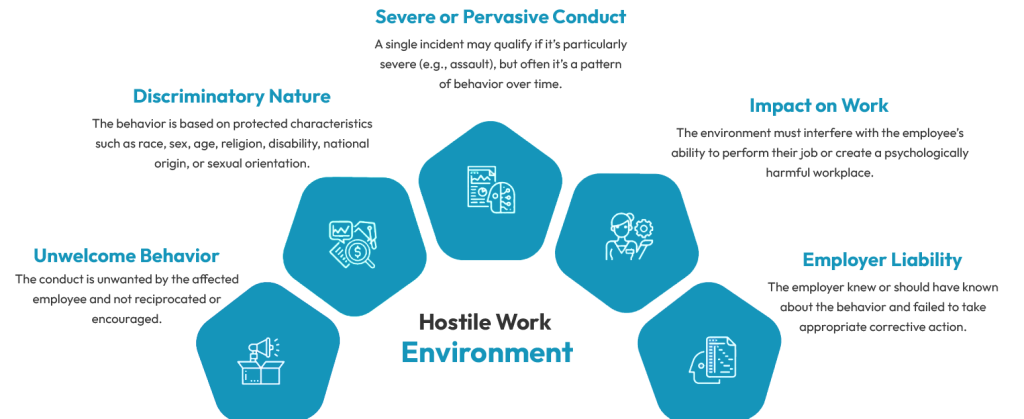
The work atmosphere becomes hostile when these actions affect the employee’s job satisfaction and mental health.
You may also know: Websites for Employees
A hostile work environment is shaped by specific actions or patterns of behavior that go beyond simple disagreements or occasional rude comments. These behaviors are often discriminatory, repeated, and create an atmosphere that makes it difficult for an employee to perform their duties effectively. Here are some behaviors that explain what constitutes a hostile work environment:
| Behavior Type | Description |
|---|---|
| Discriminatory Remarks or Slurs | Repeated offensive comments related to race, gender, religion, sexual orientation, age, or disability. |
| Verbal Abuse or Threats | Yelling, insults, intimidation, or threats directed at an employee. |
| Offensive Jokes or Pranks | Humor that targets personal characteristics or is demeaning in nature, especially when it’s ongoing. |
| Physical Intimidation or Assault | Any physical behavior meant to threaten or harm, even without actual contact. |
| Isolation or Exclusion | Deliberately ignoring or excluding someone from meetings, communications, or team activities due to bias. |
| Display of Offensive Materials | Posters, cartoons, or screensavers that reflect discriminatory or explicit content. |
| Interference with Work Performance | Punishing an employee for filing a complaint or speaking up about workplace misconduct. |
| Retaliation for Reporting | Punishing an employee for filing a complaint or speaking up about workplace misconduct. |
These behaviors, when persistent or severe, create an unlawful and toxic environment that may qualify as hostile under employment law.
A hostile work environment is generally defined as a workplace where unwelcome conduct based on characteristics such as gender, race, religion, age, or disability becomes severe or persistent enough to create an intimidating or offensive atmosphere. This kind of environment interferes with an employee’s ability to perform their job and may lead to emotional stress or mental fatigue. The behavior can include verbal abuse, discriminatory comments, inappropriate jokes, exclusion, or physical threats.
A safe and respectful workplace is the foundation of
fairness and productivity for every employee.
Many countries have employment laws that recognize the importance of maintaining a respectful and professional workplace. Although legal definitions and procedures may vary, the core idea remains consistent. Employers are expected to address inappropriate behavior promptly and ensure that employees work in an environment that is free from discrimination and harassment.
You may also read: Free Employee Onboarding Software
Recognizing the signs of a hostile work environment helps employees take action early. Here are some common indicators:
If these signs persist over time, it likely points to a hostile environment. Keeping a record of incidents can help when reporting the issue.
If employees face a hostile work environment, it’s important to act carefully but assertively. A hostile work environment typically involves harassment, discrimination, bullying, or any behavior that makes it difficult for an employee to perform their job. Here are practical steps employees can take:
1. Keep Detailed Records
When facing a hostile work environment, documentation is essential. Employees should maintain a written record of each incident, including dates, times, locations, individuals involved, and a factual description of what occurred. This includes saving any related emails, text messages, chat logs, or physical evidence. Having a well-organized timeline of events can provide critical support if the situation escalates to HR, legal authorities, or a regulatory body.
2. Understand Company Policies
Before taking formal action, employees should review the company’s policies on harassment, discrimination, and workplace behavior, typically found in the employee handbook or internal HR portal. Understanding these policies helps employees know what protections exist, what procedures to follow, and whether the employer has a clear grievance mechanism in place. This knowledge ensures that employees follow the proper channels and remain aligned with internal guidelines.
3. Report the Behavior Internally
If the situation permits, addressing the issue directly with the person involved in a calm and professional manner can sometimes resolve the matter. However, in most cases, it is more appropriate to report the behavior to a direct supervisor, manager, or human resources department. Reports should be made in writing and should be factual and specific, including any relevant documentation. Prompt internal reporting is not only a recommended step but often a legal requirement before external remedies can be pursued.
4. Escalate When Necessary
If the initial report does not lead to any action, or if the response is inadequate, employees should escalate the matter to higher levels of management or another HR representative. Many organizations also have anonymous ethics hotlines or ombudsman services that employees can use. Persistence is important—escalating the issue signals that the concern is serious and requires attention beyond the initial level of response.
5. Seek Legal or External Support
If the internal processes fail or if the behavior constitutes illegal harassment or discrimination, employees can file a complaint with external agencies such as the Equal Employment Opportunity Commission (EEOC) or their country’s relevant labor authority. It is also advisable to consult with an employment attorney to understand legal options, rights, and possible claims. Legal advice can help protect the employee against retaliation and ensure appropriate actions are taken.
6. Prioritize Mental Well-being and Career Health
Facing a hostile work environment can take a serious toll on an employee’s mental health. Seeking support from a licensed counselor, using company-provided Employee Assistance Programs (EAPs), or talking to trusted colleagues can help. If the situation becomes unmanageable and harmful to personal well-being or professional growth, it may be necessary to consider transitioning to a new role or company with a healthier culture. Protecting one’s health and professional integrity should always be a priority.
No one should tolerate a hostile work environment. Taking timely, well-documented, and appropriate action is key to protecting both your rights and your well-being.
Employers play a crucial role in preventing and addressing hostile environments to maintain a healthy workplace. The following measures help:
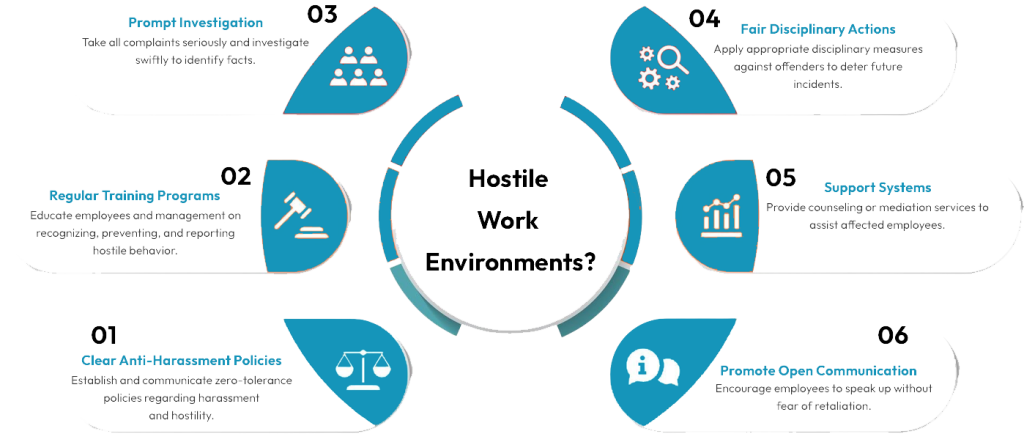
Effective prevention and response maintain morale, productivity, and reduce legal risks.
Also read: Enterprise Compensation Management: A Key Driver for Talent Retention
Employers can be held responsible if they knew or should have known about the behavior and failed to take appropriate action.
Employees should document incidents, report them to HR or management, and seek external help if the issue is not resolved internally.
Retaliation is illegal in many jurisdictions, and employees are protected when they report harassment or discrimination in good faith.
A single incident can qualify if it is extremely serious, but usually, a pattern of repeated behavior is required.
Documentation of incidents, witness statements, and any relevant communications help establish a hostile work environment.
Yes, many cases are resolved through internal investigations, mediation, or workplace policy changes before reaching legal proceedings.
Knowing what constitutes a hostile work environment helps create safer, more respectful workplaces. Employees gain confidence in identifying harmful behaviors and taking necessary action. Employers build stronger, more inclusive cultures by preventing hostility and handling issues decisively.
Workplace hostility harms everyone involved — reducing it benefits mental health, job satisfaction, and business success. Understanding the specific behaviors, legal standards, warning signs, and response steps equips all parties to keep work environments positive and productive.
If you recognize signs of hostility at work, act promptly. Early intervention often prevents escalation and fosters a healthier workplace for all.
Share This Post
Would you like to transform your dream venture into reality?

Web development has undergone significant evolution in recent years. Traditional approaches, where content…

Running a business without a website is like keeping your doors closed when…

Progressive Web Apps (PWAs) are reshaping how users interact with websites, offering the…

Transform your digital footprint & accelerate your business growth with InvoXico Technologies, a leading web development company
and your trusted partner for comprehensive digital marketing solutions.
 INDIA
INDIA


 USA
USA ©2018-2025 Invoxico Technologies. All rights reserved.