

In today’s interconnected world, mobile applications have become essential tools for businesses to reach and engage with their target audiences. According to reports from Statista, Business of Apps, and Sensor Tower, there were approximately 235.30 billion mobile app downloads worldwide in 2022. However, creating a successful mobile app involves more than just developing a great product; it also requires careful consideration of cultural and linguistic differences across various regions. This is where mobile app localization comes into play.
Mobile app localization refers to the process of adapting a mobile application to meet the linguistic, cultural, and technical requirements of specific target markets or regions. This involves translating the app’s content, modifying design elements, and adjusting functionality to ensure a seamless user experience for people from different linguistic and cultural backgrounds.
For example, a gaming app may be translated into various languages, while a food delivery app might include culturally relevant images.
The goal of mobile app localization is to make the app feel natural and intuitive to users in different regions, thereby increasing its usability, engagement, and ultimately, its success in global markets.
Before we jump into the types, benefits, and other aspects of app localization for application success, let’s see some important statistics on mobile applications. This information can provide a good foundation for understanding how to create a good website and app experience for global users.
Presenting an in-depth exploration of mobile app revenue projections and global trends, this report offers valuable insights into the evolving landscape of mobile applications.
| App market growth | Projected revenue of US$420.80 billion in 2022, with an 8.83% CAGR reaching US$673.80 billion by 2027. |
| In-app purchases (IAP) | Anticipated to dominate at US$149.90 billion in 2022. |
| Paid app revenue | Projected at US$5.02 billion, while advertising revenue is expected to soar to US$265.80 billion. |
| Advertising revenue | Expected to soar to US$265.80 billion. |
| App downloads | Forecasted at 235.30 billion in 2022, with an average revenue per download of US$1.79. |
| Revenue leader | China expected to generate US$162.90 billion in 2022. |
Total Downloads of Mobile Apps Globally (In Billions)
Here is the pie chart for the last 6 years mobile applications downloads worldwide:
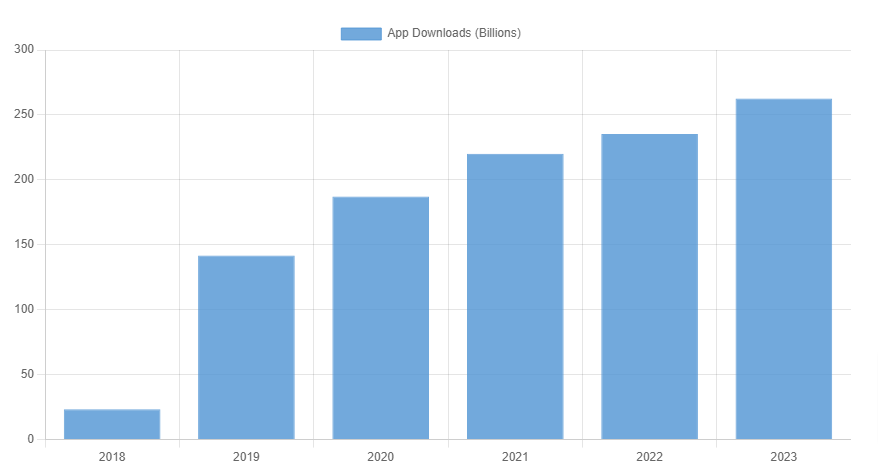
This graph not only illustrates the statistics of mobile app downloads but also signals a promising future for the industry. Therefore, there’s significant value in localizing your mobile app to ensure it reaches your target audience effectively.
Here are some important and popular types of mobile app localization:
1. Language Localization
Language localization involves translating the app’s content, including text, menus, and buttons, into the languages spoken in the target markets. This ensures that users can interact with the app in their native language, leading to a more intuitive and engaging user experience.
2. Cultural Localization
Cultural localization goes beyond language translation to adapt the app’s content and design elements to align with the cultural norms and preferences of the target audience. This may include using culturally appropriate images, colors, symbols, and references to ensure that the app resonates with users on a cultural level.
3. Regional Localization
Regional localization takes into account the specific linguistic and cultural differences within a single language or region. For example, variations in vocabulary, spelling, date formats, and currency symbols may require different localization strategies for users in different regions within the same country.
4. Functional Localization
Functional localization involves adapting the app’s functionality to accommodate the technical requirements and preferences of different regions. This may include supporting different payment methods, complying with local regulations and laws, and integrating with local services and APIs to provide a seamless user experience.
5. Visual Localization
Visual localization focuses on adapting the app’s visual elements, such as graphics, icons, and images, to appeal to users in different regions. This may involve replacing or modifying visual elements to reflect cultural preferences and avoid potential misunderstandings or cultural sensitivities.
Implementing such trends in technology for your applications, help you grow your business at a rapid speed.
Localizing your mobile app offers a multitude of benefits across various aspects of your business.
Localization isn’t just about language—it’s a strategic move that can transform your app into a global success story. Here’re some of the commercial benefits:
Just like language is the backbone of communication, app localization is the backbone of user experience. Here’re some of the UX enhancement benefits:
Standing out in the app market is essential for success. Here’re some of the market differentiation benefits:
Breaking down language barriers is key to reaching a global audience. Here’re some of the accessibility benefits:
Looking to localize your mobile application? Know about our Mobile App Development Services.
A mobile app localization strategy entails a series of steps to tailor an app for different target markets, considering language, culture, and technical requirements. Initially, market research is conducted to pinpoint viable markets based on language prevalence, cultural nuances, and demand. Following this, content analysis helps identify elements requiring localization, such as text, images, and multimedia components.
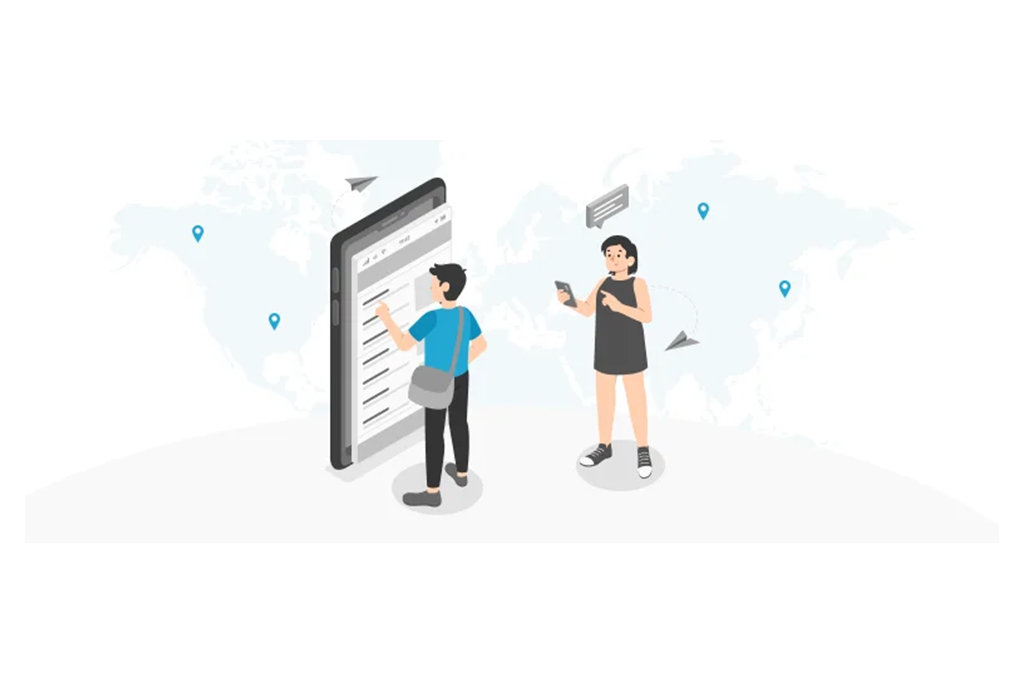
Subsequently, translation management becomes crucial, whether through internal resources or external services, to accurately render content into target languages. Cultural adaptation then ensures the app resonates with the values and preferences of diverse audiences. Additionally, technical adjustments may be needed to align with local infrastructure and regulations.
Post-implementation, rigorous testing ensures the localized app functions seamlessly, with continuous optimization based on user feedback and performance metrics ensuring ongoing relevance and success in global markets.
Subscribe now to get regular blog updates in your inbox.
Trends in mobile application development in 2025 showcase an evolution in localization strategies. AI-driven translation tools expedite language adaptation, while hyper-personalization tailors content based on user data. AR and VR technologies offer immersive cultural experiences for specific regions, driving innovation in app localization.
Localizing your mobile apps involves several key steps to ensure they resonate with diverse audiences worldwide:
1. Language Translation
Translate all text within the app, including menus, buttons, notifications, and user interface elements, into the languages spoken in your target markets.
2. Cultural Adaptation
Tailor the app’s content, imagery, and design elements to align with the cultural preferences and norms of each target audience. This may involve adjusting colors, symbols, and references to ensure they are culturally appropriate.
3. Regional Customization
Consider regional variations within languages and adapt the app accordingly. This may include using different dialects, date formats, currency symbols, and measurement units to cater to the specific preferences of users in different regions.
4. Functional Adjustments
Modify the app’s functionality to accommodate the technical requirements and preferences of different regions. This may involve supporting different payment methods, complying with local regulations, and integrating with local services and APIs.
5. Visual Localization
Adapt visual elements such as graphics, icons, and images to appeal to users in different regions. This may involve replacing or modifying visual elements to reflect cultural preferences and avoid potential misunderstandings.
6. Testing and Iteration
Test the localized version of the app thoroughly to ensure that it functions as intended and provides a seamless user experience. Iterate based on user feedback and performance metrics to continually improve the localized app.
Here are some tools commonly used for mobile application localization:
| Crowdin | Cloud-based platform for efficient translation management. |
| Transifex | Collaborative platform with translation memory and glossary features. |
| Phrase | Simplifies localization with an intuitive interface and version control integration |
| Loco | Web-based platform with in-context editing and translation memory. |
| POEditor | Offers version control integration and automatic translation suggestions. |
Let’s grow your mobile application! Get quote on our Mobile App Solutions now.
Businesses are increasingly recognizing the importance of mobile app localization for reaching diverse audiences across borders. By adapting apps to linguistic, cultural, and regional nuances, businesses can unlock a myriad of benefits, from increased market penetration to enhanced user engagement. Through meticulous translation, cultural adaptation, and functional adjustments, app localization lays the groundwork for seamless user experiences and sustainable growth. As the global app market continues to expand, embracing localization is not merely a choice but a strategic imperative for businesses aiming to thrive in the interconnected world of mobile technology.
Share This Post
Would you like to transform your dream venture into reality?

Web development has undergone significant evolution in recent years. Traditional approaches, where content…

A clear understanding of what constitutes a hostile work environment helps both employees…

Progressive Web Apps (PWAs) are reshaping how users interact with websites, offering the…

Transform your digital footprint & accelerate your business growth with InvoXico Technologies, a leading web development company
and your trusted partner for comprehensive digital marketing solutions.
 INDIA
INDIA


 USA
USA ©2018-2025 Invoxico Technologies. All rights reserved.